Mercedes Benz

Mercedes Benz

Mercedes Benz Automatics


Chinese carmaker Geely has become the biggest investor in Mercedes-Benz owner Daimler, saying it hopes to cooperate with the German giant on electric cars.
Geely shares jumped in Hong Kong after the deal to buy almost 10% of the firm was announced over the weekend.
The Chinese carmaker already fully-owns Sweden's Volvo and black cab maker London Taxi Company.
Chairman Li Shufu is expected to meet Daimler executives on Monday and German government officials later in the week.
Geely's 9.7% stake in the high profile German carmaker has raised some concerns that the Chinese firm will seek access to technology and innovation in exchange for the deal.
But the German government said it saw "no need to act in terms of competition rules or foreign investment rules".

'Invaders from outside'

China is widely considered the most important future market for global car manufacturers.
In a statement by Geely, Mr Li said he wanted to "accompany Daimler on its way to becoming the world's leading electro-mobility provider," and was looking for a long-term commitment.
Describing what he called a "strategic vision," he argued that "invaders from outside" the traditional car sector, meant firms needed to cooperate through partnerships and alliances.
Traditional carmakers are increasingly facing competition from newcomers from the technology sector, including Tesla and the Google-associated Waymo.

  • Byton unveils futuristic smart car at CES
  • First fall in UK car production in 8 years


Geely production lineImage copyrightAFP
Image captionGeely cars are largely unknown outside of China

Also over the weekend, Daimler announced a $1.9bn (£1.4bn) investment into a partnership with another Chinese auto firm, BAIC.
The money will go into modernising a BAIC plant to build Mercedes cars including electric vehicles, the two companies said.
Daimler and BAIC are already cooperating in the Chinese market, where foreign production is often only permitted through partnerships with Chinese firms.
Last week, fellow German carmaker BMW announced a deal with Chinese manufacturer Great Wall Motor to build electric-powered Mini cars in China for the local market.
The Chinese government has said 20% of cars sold by 2025 should be electric or rechargeable-hybrid vehicles - a target that is spurring many global carmakers to raise their investment in China.
BMW NEW MODEL X3

BMW NEW MODEL X3

Abhishek by STYLZIST 
I’m not sure if there has been a more controversial car from BMW, since the M3 went turbocharged, than the BMW X2. Many purists are …


 more controversial car from BMW, since the M3 went turbocharged, than the BMW X2. Many purists are …

I’m not sure if there has been a more controversial car from BMW, since the M3 went turbocharged, than the BMW X2. Many purists are furious about the X2, as they feel it’s only adding to the eventual ruin of BMW’s “Ultimate Driving Machine” ethos. However, I defy anyone to actually drive the X2 and not come away at least a little bit impressed.
We recently had the opportunity to drive the new BMW X2 in Palm Springs, California, both on and outside the brand’s Performance Driving School at the Thermal Club. This was a more freeform press launch for BMW, which allowed us journalists to just grab the key and go, with every car on hand, and have fun in the canyons. On this trip, there were several cars available to test, including the BMW M5 (review to come), the X2, 6 Series GT and more. But since all the M5s were taken when I first arrived, I snagged the key to an X2 with enthusiasm and headed for the canyon.
BMW X2 xDrive28i Thermal Club0009 830x553

What is the BMW X2?

BMW has been drawing the ire of enthusiasts these past few years, mostly for supposedly diluting its own brand heritage and DNA. When the Bavarians first debuted its UKL architecture, a *gasp* front-wheel drive architecture, its fans collectively lost their minds. Now, BMW has no less than three cars built on that platform (excluding MINIs) and it’s already working on a fourth, with the upcoming 1 Series. The most recent update example is the BMW X2, a small, stylish crossover designed to be the sportier alternative to the BMW X1.

The BMW X2 is smaller than its X1 sibling and more coupe-like, with a more aggressive roofline, shorter wheelbase, shorter overhangs and far more style. On paper, though, styling and size are about the only differences between the two cars. The BMW X2 uses the same 2.0 liter turbocharged B48 engine as the X1, so it makes 228 hp and 258 lb-ft of torque. That engine is paired with the same Aisin-sourced eight-speed automatic gearbox and Haldex all-wheel drive system (front-wheel drive is standard).
medianet_width = "728"; medianet_height = "90"; medianet_crid = "827819726"; medianet_versionId = "3111299";
id="google_ads_iframe_/1022709/Leaderboard_mobile_inside_article_0__container__" style="border: 0pt none; box-sizing: border-box;">
BMW X2 xDrive28i Thermal Club0012 830x553

The Devil’s in the Details

While it seems that the X2 is basically just a prettier X1, there’s far more to it than that. BMW has tuned the steering, suspension and dynamics of the X2 to be distinctively sportier than its X1 sibling. Its steering rack is quicker, its suspension is significantly firmer and its turn circle is shorter. Thanks to that quicker steering rack and shorter wheelbase, it turns it quicker and sharper than the X1. It’s also lower than the X1, so there’s noticeably less body roll and more lateral grip.
So while the X2 seems like just an X1 wearing a designer outfit, there’s a lot more going on underneath the skin.

It Is Stylish, Though

Let me make this perfectly clear, I know nothing about fashion. I look at modern runway models and I see people trying on outfits for Game of Thrones, not outfits that human beings might actually wear in the real world. I find high-end fashion confusing, with much of it absurd and ridiculous, so maybe I’m not the best judge of style and design. For what it’s worth, though, I like the way the X2 looks.
It’s funky and weird and it makes me smile. Its nose shoots way down low and has a surprisingly short front overhang for a front-wheel drive-based crossover. It also sits very low for a crossover which, combined with its aggressive roofline, makes it look very sporty. I even like its weird upside down Kidney Grilles. But, by far and away, my favorite bit of design is its C-pillar mounted Roundel, like the classic BMW 3.0 CSL.

Admittedly, I didn’t personally love the X2’s design when I first saw it. It was a bit too odd, too radical. But as time went on, I grew to really like it. And it’s truly a car that must be seen in person to appreciate, because it looks much better in the flesh than in photos. The way light reflects off of its funky paint colors and shows off its subtle curves and shadows really makes the X2 seem fun and special in person. Side note: if you’re buying an X2, get a fun color, like Galvanic Gold, Misano Blue and Sunset Orange Metallic. Personally, Sunset Orange is the color I’d choose and it’s the color I did choose in Palm Springs.
At the event, the opinions were a bit mixed among journalists about the BMW X2’s design. Though, I think I spoke to more journalists who did really like it than not. Which surprised me, as it’s a pretty polarizing car. So, for whatever it’s worth, we seem to think it’s a pretty cool little Bimmer.

Not As Stylish Inside

If there’s a big disappointment about the X2, it’s that its cabin isn’t as stylish as its body. While the exterior is so funky and interesting, its interior is humdrum. One the inside, there’s very little to differentiate the X2 from the X1, which is a bit of a bummer once you’ve seen the outside. It’s basically identical to its cheaper sibling, save for maybe some trim pieces.
Having said that, the interior is surprisingly premium feeling. Every material feels expensive and sturdy, with the only cheap, hard plastics being found way down low on the door bins. And even still, those aren’t bad. Even when you close the doors, they make an expensive *thump*. For such a small car and one that’s relatively inexpensive, it feels surprisingly premium. More so than what I remember the X1 feeling like.


Obviously, it also gets BMW’s newest iDrive infotainment system, which is as brilliant as ever. It features touchscreen capability, as well as the traditional rotary controller, and it has to be the best system in the segment, if not the industry as a whole. It’s superb. I also really like the gauge cluster, which uses two traditional looking dials that feature traditional needles over digital numbers. They also remain the same regardless of driving mode the car is in, which is refreshing in this modern era of completely digital dials.

Small on the Outside, Big on the Inside

The BMW X2 is able to pull off a clown-car trick of being far larger on the inside than it seems on the outside. Standing next to the X2, you’d never think you could fit actual humans in the back seat. However, I was able to sit behind myself just fine, with adequate head and knee room. Admittedly, I’m only 5’9″, so passengers six-feet and over might have trouble in the back.
There is also a decent amount of trunk space for such a small car. It’s obviously more compromised than the X1, in terms of cargo space, thanks to its stylish roof but it’s not as bad as you might think. There’s more than enough space for three or four luggage bags, you could likely fit a bike without the front wheel back there, a baby stroller or easily a couple of dogs. For someone with a small family or active lifestyle, the BMW X2 could be perfectly practical.

Seating Can Be Weird

There is a complaint about the interior, though, aside from its humdrum styling — its seating position. The entire interior is designed to be more SUV-like, much like the X1. So the dash and gauges are all sort of slanted upward and the shift lever is very tall, so as to accommodate a higher seating position. But the X2 actually sits quite low. So if you’re seating position is high, you feel like you’re sitting on top of the car, rather than in it.
Admittedly, it does allow you to adjust the seat very low, so you can sit low to the ground. If you’re like me, and you like to sit as low as possible while still being able to see outward, this feels weird, as all of the controls are sort of aimed upward slightly. It was just hard for me to get comfortable and find a seating position I really liked.
Though, the seats themselves are comfortable and outward visibility is surprisingly good for having such a short roof and windows. The A-pillars are thin and placed well, so even though the windshield is aggressively raked, you can see out of it really well and you don’t have to crane your head around the A-pillars to see through corners.

More Hot Hatch Than Coupe SUV

The BMW X2 is going to frequently be called a sort of coupe-like SUV. Hell, even we call it that. And that’s because it sort of is. But that’s not how you should look at the X2 because that’s not how it feels. If anything, on the road, it feels more like a hot hatchback than a coupe-like SUV. It’s low, so you don’t feel like you’re sitting up high, even with the odd seating position. And because it’s low, wide and stubby, there’s very little body roll, allowing it to feel nimble and light on its feet.
Our car had the optional Dynamic Handling Package equipped, which gave it what BMW calls “M Sports Steering”. I didn’t sample an X2 without that, so I’m not sure how much of a difference it actually makes, but I can say that it steers surprisingly well with it. Steering weight is heavy, shockingly so for what the car is. I’ve driven the X1 and its steering is very light. The X2’s is heavy, heavier than I remember even the M2 being. It’s also precise and sports a quick ratio rack, making it feel very sharp.
There’s also a genuinely surprising amount of front-end grip, which allows you to push hard into corners with little understeer, and make it out the other side alive. It is still a front-wheel drive based crossover, so it’s not going to be the sharpest tool in the shed, but it’s genuinely fun to drive hard and far more so than we would have ever anticipated.
The ride is also firm, far firmer than expected. It’s never harsh, as it’s well damped and bumps are dealt with in one vertical motion, which is nice. But it’s seriously firm and feels more like a sports car than a crossover. Personally, I like that but I’m not so sure customers will love it. Being that our car had the aforementioned handling package, it also had Dynamic Damper Control, which gave it adjustable dampers. In Comfort, it was still pretty firm, so we’re wondering if maybe customers who aren’t looking for a sporty ride would prefer the standard suspension setup. Or just an X1 instead.

Down on Power, Not Fun

One of the biggest criticisms thrown at the X2 when it was first revealed was its power, or lack thereof. With only 228 hp and 258 lb-ft of torque on tap, the BMW X2 doesn’t have the most potent of powerplants. BMW claims a 0-60 mph time of 6.3 seconds for our xDrive-equipped model. That’s an entirely believable claim but it might actually be a touch quicker than that. Six seconds flat might be a bit more realistic.
Either way, though, you won’t be wanting for more power on the road. On the twisty Box Canyon road outside of Thermal, no one was complaining about a power deficiency. The X2’s little turbo-four had more than enough punch to move it through corners with enthusiasm. In fact, its lack of extreme power actually made it really easy to get back on the power early, let xDrive sort out the grip, and fire you out of corners. Being that we were on public roads, I won’t disclose my speed but I never once thought it needed more power.


First Generation of computer

First Generation of computer

First Generation


The period of first generation was 1942-1954. First generation of computer started with using vacuum tubes as the basic components for memory and circuitry for CPU(Central Processing Unit). These tubes like electric bulbs produced a lot of heat and were prone to frequent fusing of the installations, therefore, were very expensive and could be afforded only by very large organisations. In this generation mainly batch processing operating system were used. In this generation Punched cards, Paper tape, Magnetic tape Input & Output device were used. There were Machine code and electric wired board languages used.


The main features of First Generation are
.Vacuum tube technology
 Unreliable
 Supported Machine language only
 Very costly
 Generate lot of heat
 Slow Input/Output device
 Huge size
 Need of A.C.
 Non portable
 Consumed lot of electricity
Some computer of this generation were
 ENIAC
 EDVAC
 UNIVAC
 IBM-701
 IBM-650


Volvo V60 Is beast

Volvo V60 Is beast

Abhishek by STYLZIST


  • The new Volvo V60 is based on the Scalable Product Architecture (SPA)
  • Volvo V60 comes with two plug-in hybrid powertrain options - T6 and T8
  • Volvo V60 comes loaded with premium interior, smart gizmos


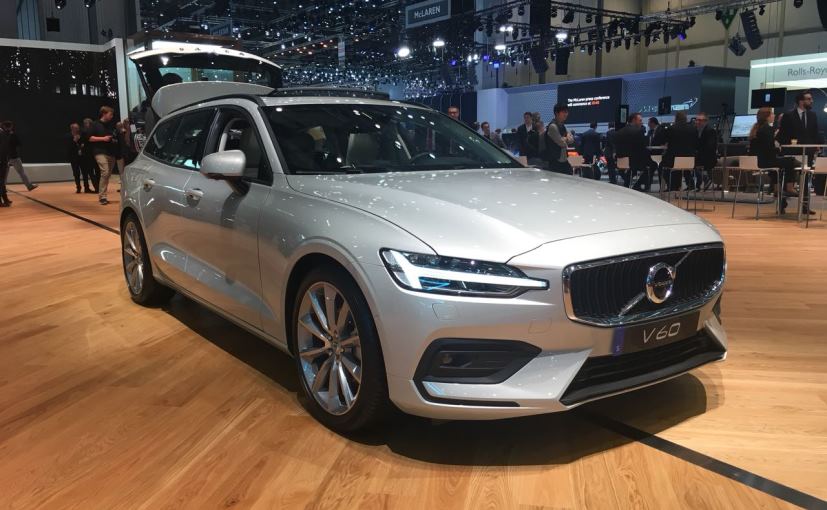
The new Volvo V60 has officially made its public debut at the Geneva Motor Show 2018 after the company unveiled the car last month. The new-gen V60 Estate Wagon is built on the company's Scalable Product Architecture (SPA) and shares its underpinnings with the company's V90 and the XC60 SUV. Volvo had announced that it will electrify all new cars from 2019, thus the Volvo V60 comes with two plug-in hybrid powertrain options - T6 and T8. The new Volvo V60 will first go on sale in the UK and deliveries are expected to commence from Q3 2018 calendar year.
volvo v60 at geneva 2018
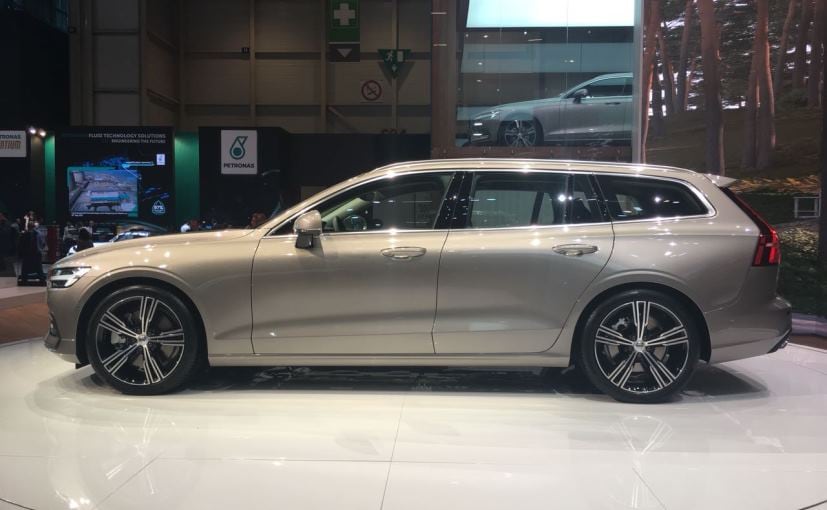
Volvo V60 is based on the Scalable Product Architecture
Under the hood, the V60 estate will come with a set of 2.0-litre four-cylinder engines offered in plug-in hybrid, only-petrol, and only-diesel options. The Volvo V60's new T6 Twin Engine AWD petrol plug-in hybrid generates a combined 335 bhp, while the more powerful T8 Twin Engine AWD petrol plug-in hybrid churns out a maximum of 385 bhp. The regular petrol choice includes T5 or T6 powertrains while there are diesel options as well on offer - D3 and D4 engines.
volvo v60 at geneva 2018
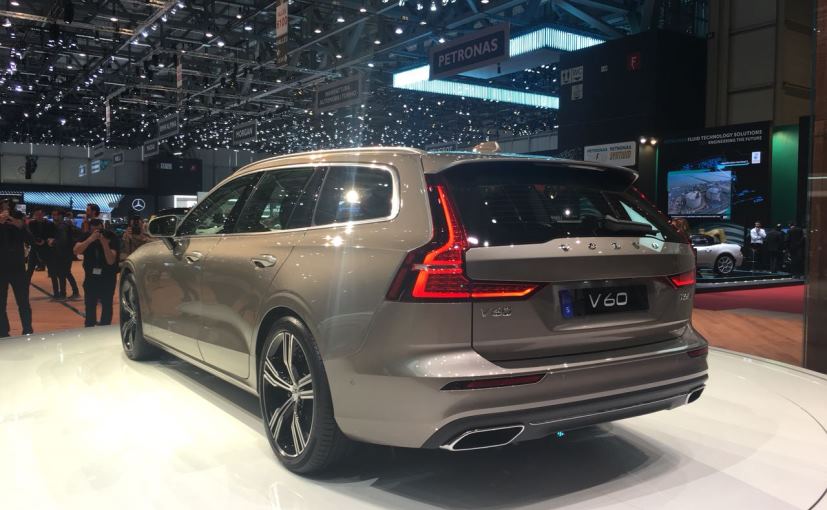
Volvo V60 comes with two plug-in hybrid model options
Visually, the new Volvo V60, in all regards, looks like a scaled down version of its older sibling, the V90. Up front, the V60 comes with the company signature grille, flanked by the iconic Thor's Hammer LED daytime running lamps with LED headlamps, and a well sculpted front bumper with a wide central airdam. Other feature will include - new sporty alloy wheels, a long bonnet and vertically stacked LED taillamps that are unique to the Volvo estates and SUVs.
volvo v60 at geneva 2018
Volvo V60 shares its styling and design with the V90
Inside, the Volvo V60 comes loaded with premium interior, smart upholstery and the latest gizmos available in Volvo's line-up. Volvo's Sensus infotainment system is fully compatible with Apple CarPlay, Android Auto and 4G, and keeps drivers connected at all times. The system is controlled via an intuitive tablet-style touch screen that combines car functions, navigation, connected services and entertainment apps. Volvo also offers its Pilot Assist system - which supports the driver with steering, acceleration and braking on well-marked roads, at speeds up to 80 kmph. The V60 also includes Run-off-Road Mitigation, Oncoming Lane Mitigation and other steering-assistance systems. The optional Cross Traffic Alert with auto brake further improves safety for people inside and outside the car.
 Generation of computer

Generation of computer


Following are the main five generations of computers
Serial Number
Generation & Description
1
First Generation The period of first generation : 1942-1954. Vaccum tube based.
2
Second Generation The period of second generation : 1952-1964. Transistor based.
3
Third Generation The period of third generation : 1964-1972. Integrated Circuit based.
4
Fourth Generation The period of fourth generation : 1972-1990. VLSI microprocessor based.
5
Fifth Generation The period of fifth generation : 1990-onwards.ULSI microprocessor based

Lincolnโ€™s Aviator luxury SUV

Lincoln’s Aviator luxury SUV

Lincoln’s Aviator luxury SUV makes its return as a stylish plug-in hybrid

By Abhishek saini


Lincoln believes the future is all about SUVs. So it’s reviving the Aviator name (previously used for a rebadged Ford Explorer) for the first of two new utility vehicles it plans to launch through 2020. The new Lincoln Aviator debuts in preproduction form at this week’s 2018 New York Auto Show, and goes on sale next year.


Lincoln’s lineup is already chockfull of SUVs, but none of them are anywhere near as good-looking as this new Aviator. Its cab rearward proportions, crisp lines, and sloping roofline give it a sportier appearance than the Nautilus and MKCcrossovers, but with a body that’s more reasonably sized than the massive Navigator. Lincoln design boss David Woodhouse explained that his team aimed for a less aggressive look than some other SUVs.“
We want to be about seduction, not attack,” he said.
Under the skin, the Aviator rides on an all-new platform that accommodates standard rear-wheel drive or optional all-wheel drive. While the Aviator is the first vehicle based on this platform, expect other Ford or Lincoln models to make use of it in the future. Lincoln claims the rear-wheel drive base helped make the designers’ jobs easier, and will also make for sportier handling. Lincoln isn’t ready to divulge full powertrain details yet, but it did say the Aviator will be offered with a stand-alone gasoline engine or with a plug-in hybrid powertrain based around a twin-turbocharged gasoline engine.


The Aviator offers three rows of seating, with a sliding second row and the “Perfect Position” seats from the Continental and Navigator upfront. These elaborate chairs feature 30-way power adjustment and massage. The driver gets a standard 12-inch digital instrument cluster, along with the expected central touchscreen display. Like the exterior, the design of the dashboard is appealingly crisp and clean.
Lincoln is the latest automaker to experiment with abolishing the key fob. Aviator owners will be able to use their smartphones as keys, allowing them to lock and unlock the doors, start the engine, and preset the climate control without having to carry a separate fob. The system also includes a valet key feature that disables certain vehicle functions. If the driver’s phone dies, they can get into the Aviator using a key pad on the driver’s door pillar. Lincoln was also quick to note that the Aviator features wireless phone charging.
The Aviator also gets Lincoln parent Ford’s new Co-Pilot360 suite of driver-assist features. It includes autonomous emergency braking, blind-spot monitoring, lane keep assist, a rearview camera, and automatic high beams as standard. Lincoln will also offer reverse brake assist, which automatically applies the brakes if the vehicle detects an obstacle while backing up.
The Aviator debuting in New York is what Lincoln calls a preproduction “teaser” model, so there are still many blanks left to fill in. Full details on Lincoln’s latest SUV will be released closer to the production-spec version’s launch next year.

History of  computer

History of computer

Computer Generations
Generation in computer terminology is a change in technology a computer is was being used.

 Initially, the generation term was used to distinguish between varying hardware technologies. But nowadays, generation includes both hardware and software, which together make up an entire computer system. There are totally five computer generations known till date. Each generation has been discussed in detail along with their time period, characteristics. We've used approximate dates against each generations which are normally accepted.

Introduction to Computer

Introduction to Computer


Introduction to Computer


 Computer
A computer is an electronic device, operating under the control of instructions stored in its own memory that can accept data (input), process the data according to specified rules, produce information (output), and store the information for future use.
Functionalities of a computer

 Any digital computer carries out five functions in gross terms:


 Computer Components
Any kind of computers consists of HARDWARE AND SOFTWARE.
Hardware:
Computer hardware is the collection of physical elements that constitutes a computer system. Computer hardware refers to the physical parts or components of a computer such as the monitor, mouse, keyboard, computer data storage, hard drive disk (HDD), system unit (graphic cards, sound cards, memory, motherboard and chips), etc. all of which are physical objects that can be touched.


Software
Software is a generic term for organized collections of computer data and instructions, often broken into two major categories: system software that provides the basic non-task-specific functions of the computer, and application software which is used by users to accomplish specific tasks.

Acura MDX

Acura MDX

Acura shows off a sportier-looking MDX full-size crossover


In addition to revealing the production-ready Acura RDX and its new A-Spec trim, Acura surprised us all with a new A-Spec version of its venerable full-size crossover, the MDX. And in the same breath, Acura reconfirmed the revival of its loved Type-S line of high-performance modes, which will include a new turbocharged V6.
Like all other A-Spec models before it, such as the TLX and more recently the RDX, the MDX A-Spec offers buyers the chance to opt for a sportier looking variant.
Unfortunately, like the TLX A-Spec and RDX A-Spec, there isn’t much in terms of performance improvements on the crossover MDX A-Spec. Instead, the package is all about appearance, serving up bespoke interior and exterior appointments.
“This MDX A-Spec adds a dimension of sporty, aggressive and youthful appeal that will attract new buyers to the best-selling three-row luxury SUV of all time,” Henio Arcangeli, Jr., senior vice president of American Honda Motor, said in a statement.
Changes amount to larger, 10-spoke 20-inch Shark Grey alloy wheels with low profile 265-series tires; more aggressive lower front and rear fascia; body color-matching side skirts; and larger exhaust tips.
On the inside, the new Acura MDX A-Spec benefits from unique interior appointments, such as the only choice of either red or black leather interior with Alcantara inserts and contrast stitching. Other details include new gauge designs for the cluster just for the A-Spec, sport pedals, faux-carbon trim, and a sport steering wheel with redesigned paddle shifters.
The Acura MDX A-Spec remains powered by the same Honda-sourced “J35” 3.5-liter V6 with 290 horsepower, direct-injection, cylinder deactivation, and i-VTEC variable valve timing. The MDX also retains a nine-speed automatic and SH-AWD (Super Handling All-Wheel Drive) system.
As for the return of the Type-S line of high-performance models, Acura reconfirmed its revival efforts, which includes a new turbocharged V6. The last time a Type-S model existed was over a decade ago, with the Acura TL from two generations ago. It featured a track-tuned chassis, suspension, and brakes, as well as subtle improvements, performance tires, and the choice of a manual transmission.
Acura didn’t announce specifically when the Type-S models should surface, but it did confirm that the MDX A-Spec will commence production shortly at Honda’s East Liberty Plant in Ohio.